Business context
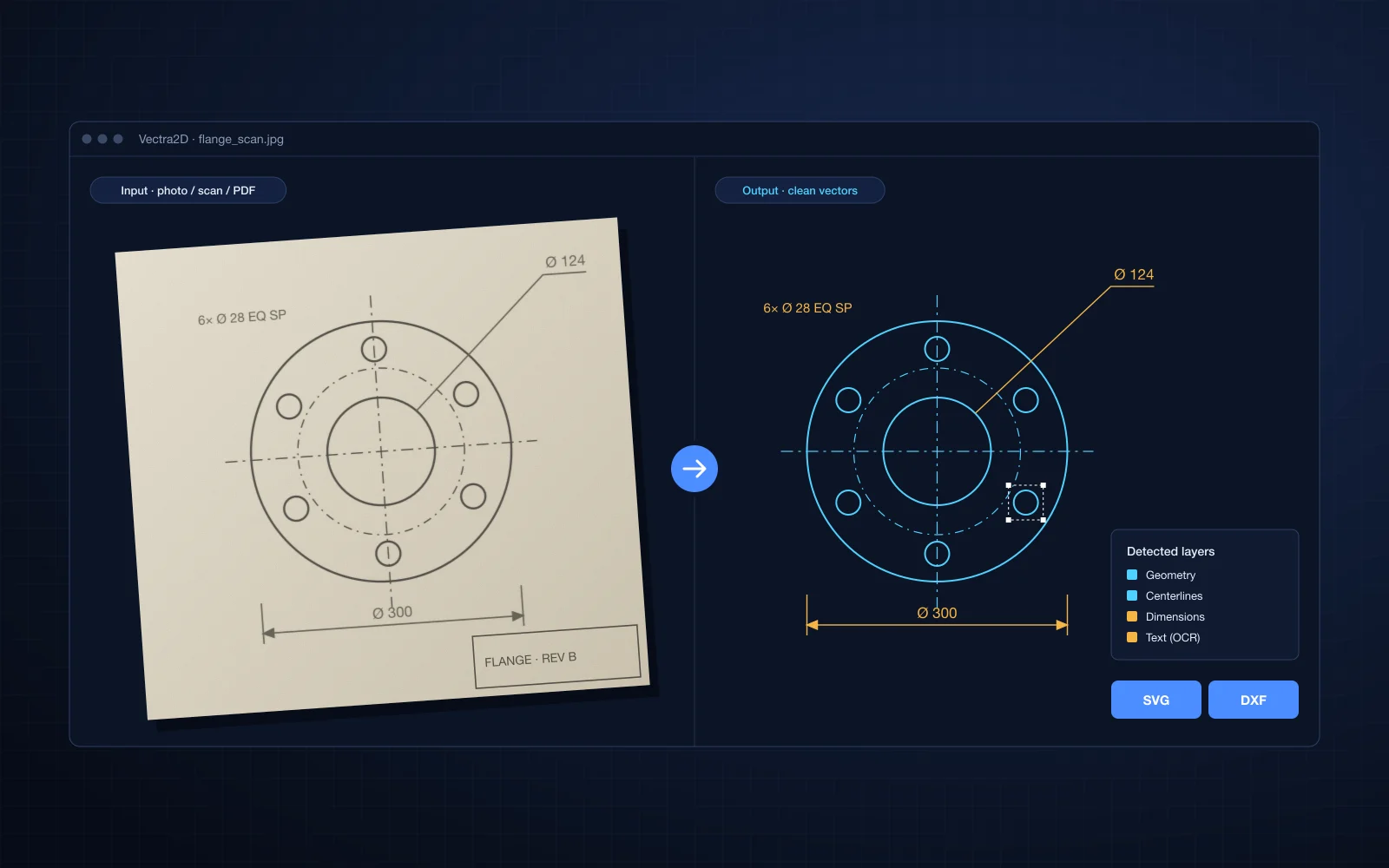
Many manufacturers keep years of engineering drawings only as images or scans. The dimensions, tolerances and parts lists inside them cannot be searched or reused. Drawing intelligence in our VectraXD™ platform builds on VectraXD™ Vectorization to make that data usable.
The challenge
Vectorization recovers the lines, but not what the drawing means. A drawing mixes views, dimensions, tolerances, weld symbols and a parts list, and each must be read in context. Rebuilding 3D CAD models from drawings is still slow, manual work.
Our solution
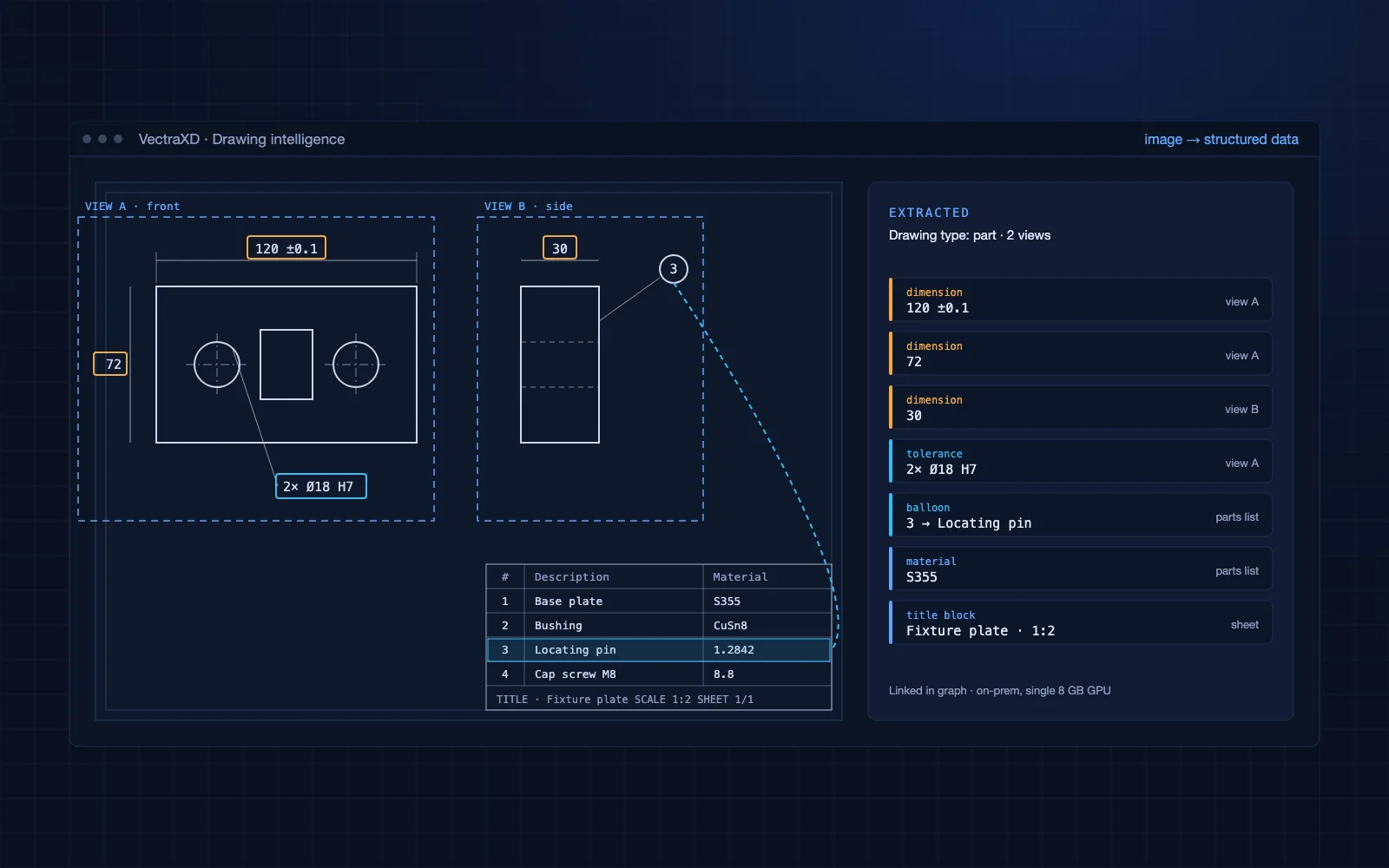
We built an AI pipeline that reads a drawing step by step, the way an engineer would. It reads all the text, separates each drawing view and works out what kind of drawing it is. It then labels every piece of text and links the results in a graph database, so each callout on the drawing points to its row in the parts list. The pipeline can run entirely on-premise on a single 8 GB GPU, with a cloud AI model as an option.
- Layout-aware text reading for drawings
- Automatic separation of drawing views
- Sorting of drawings into assemblies, parts and floor plans
- Extraction of title block, parts list, tolerances and materials
- A linked graph of all drawing data
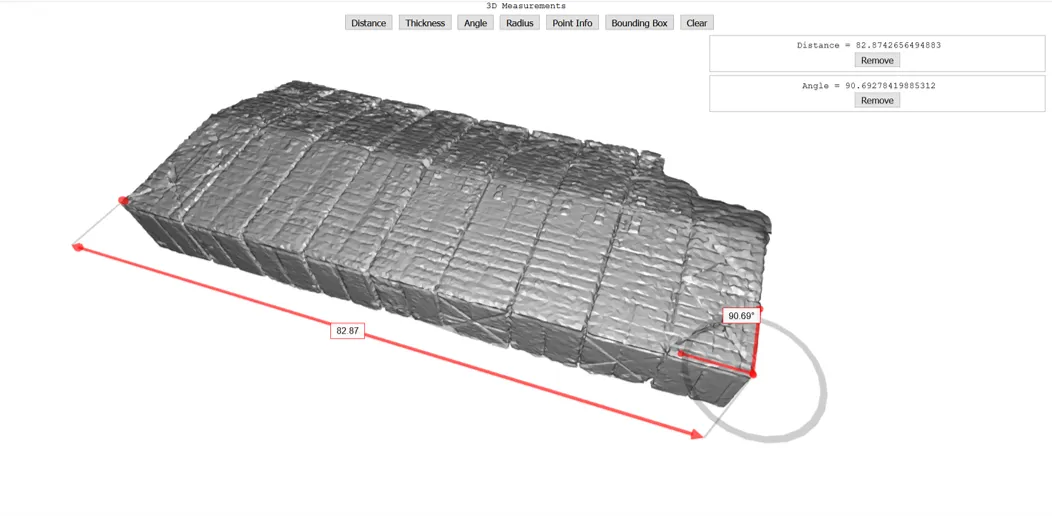
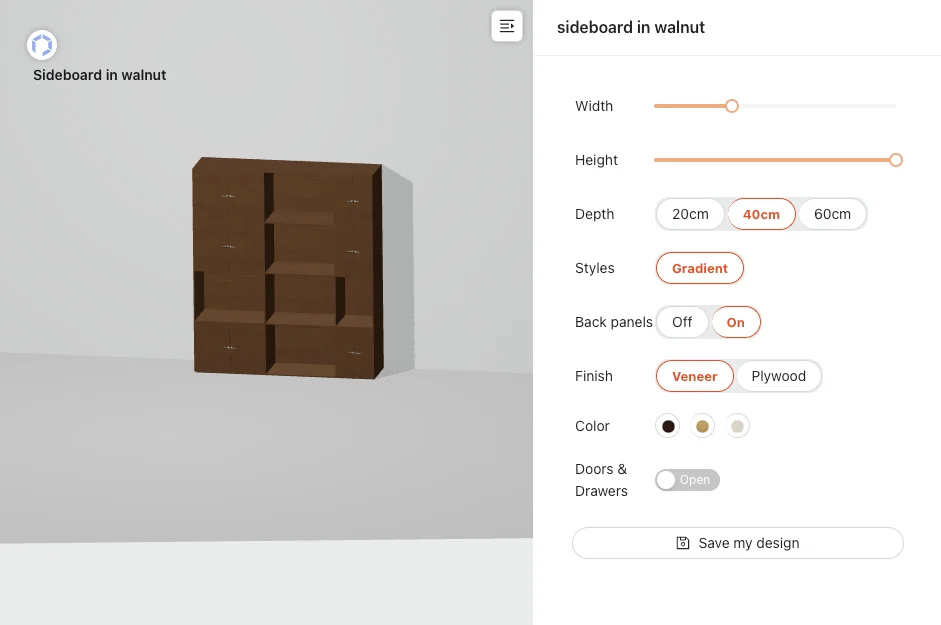
- A 2D-to-3D prototype in which an AI model writes CAD scripts and exports STEP files for simple parts
Business impact
- Dimensions, tolerances and parts lists in legacy drawings become searchable data
- Each callout stays linked to its parts-list row, so data comes out with its context
- On-premise operation lets manufacturers keep sensitive drawings in-house
- The 2D-to-3D prototype points to automatic CAD models from drawings that exist only on paper
Availability
Drawing intelligence is in development as part of the VectraXD™ platform, with early access on request.